
Car Shipping from Dubai to Russia & Moscow: Complete Sea Ports & Cost Guide (2026)
Everything you need to know about exporting vehicles from the UAE to Russia and Moscow. Compare RoRo versus container shipping, explore detailed analyses of major Russian sea ports, discover door-to-door delivery routes to inland cities like Moscow, Kazan, and Novosibirsk, and master Russian customs clearance, import duties, and E-PTS registration.
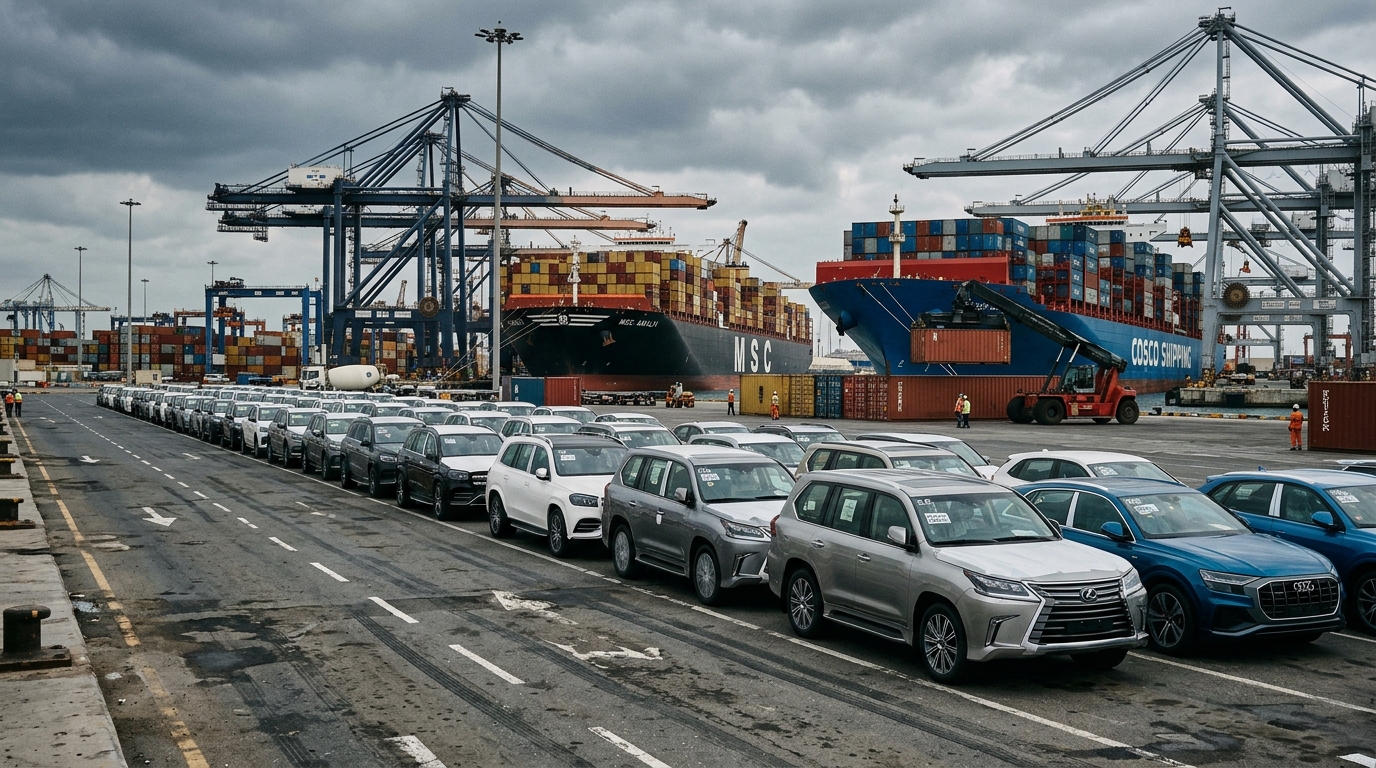
Modern luxury SUVs and sedans staged at Jebel Ali port terminal in Dubai awaiting maritime export to Russian marine gateways.
Why Dubai is the #1 Vehicle Sourcing Hub for Russia
Over the past several years, Dubai and the wider United Arab Emirates have emerged as the undisputed primary hub for sourcing and importing private and commercial vehicles into Russia. From brand-new luxury SUVs and executive sedans to specialized off-road vehicles and commercial fleets, UAE car dealerships and auto auctions offer an unmatched selection of European, Japanese, American, and Chinese specifications.
For Russian buyers, sourcing automobiles from Dubai provides distinct financial and logistical advantages: competitive tax-free purchasing prices in the UAE, immediate vehicle availability without lengthy factory waiting lists, and well-established maritime and multimodal supply chain corridors connecting Jebel Ali Port directly to major Russian entry points.
However, successfully importing a car from Dubai into Russia requires navigating a complex web of shipping modalities, port infrastructure, customs valuations, utilization fees (утилизационный сбор), and electronic title registration (ЭПТС). This guide provides an exhaustive, actionable roadmap for 2026.
1. RoRo vs. Container Car Shipping: Which is Best?
When shipping automobiles from UAE ports (primarily Jebel Ali in Dubai or Port Khalid in Sharjah) to Russia, shippers must choose between two primary maritime transport methods: Roll-on/Roll-off (RoRo) and Containerized Freight.
RoRo Shipping
Economy ChoiceVehicles are driven directly onto specialized car-carrier vessels using built-in ramps and secured inside the ship's cargo decks.
- Lower freight cost for standard commercial vehicles.
- Fast port loading and discharge at dedicated RoRo berths.
- No personal items allowed inside the vehicle cabin.
- Higher exposure to dock handling during transfer.
Container Shipping
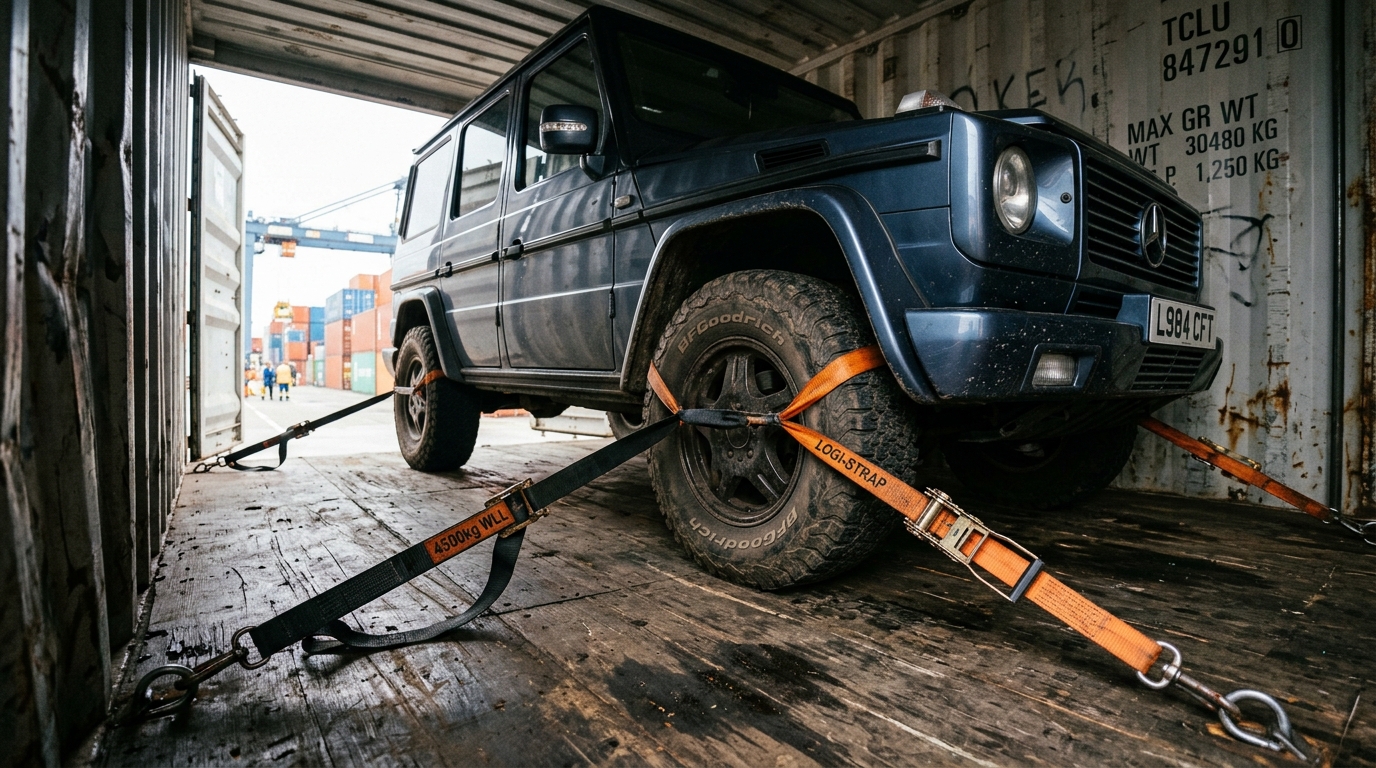
Maximum ProtectionVehicles are loaded into private 20ft or 40ft High Cube steel containers, braced with wooden chocks, and strapped to floor rings.
- 100% weather & physical protection from dock to destination.
- Can pack spare tires, parts, or personal effects inside.
- Cost-effective when shipping 2 vehicles in a 40ft HQ container.
- Slightly higher terminal stuffing and destuffing charges.
| Feature / Metric | RoRo Vessel | 20ft Container (1 Car) | 40ft HQ Container (2 Cars) |
|---|---|---|---|
| Average Ocean Freight | $1,800 - $2,400 | $2,400 - $3,000 | $3,600 - $4,500 ($1,800/car) |
| Security Level | Moderate (Open deck access) | Very High (Sealed box) | Very High (Sealed box) |
| Personal Belongings Inside | Not Permitted | Permitted (Up to limit) | Permitted (Up to limit) |
| Port Handling Speed | Fast (Drive-off) | Standard (Crane + Unstuffing) | Standard (Crane + Unstuffing) |
| Recommended For | Standard sedans & work trucks | Luxury sedans, supercars & SUVs | Dealership orders & families |
2. Port-by-Port Analysis: Major Russian Sea Ports & Gateways
Russia spans 11 time zones with extensive coastlines along the Baltic Sea, Black Sea, Caspian Sea, and Pacific Ocean. Choosing the correct destination port is critical to reducing inland trucking costs, avoiding seasonal port congestion, and ensuring rapid customs clearance. Below is an exhaustive technical analysis of each primary maritime gateway used for Dubai car imports.
Port of Novorossiysk (НМТП)
The Port of Novorossiysk is Russia’s largest commercial sea port on the Black Sea and serves as the primary southern maritime gateway for cargo originating from the Middle East, Mediterranean, and North Africa. For vehicles shipped from Jebel Ali, container lines route vessels through the Persian Gulf, Red Sea/Suez Canal, and into the eastern Mediterranean, with transshipment hubs in Turkey (Istanbul / Mersin) or Egypt (Port Said) before arriving at Novorossiysk's NUTEP or NLE container terminals.
Strategic Advantages for Car Importers: Novorossiysk offers the shortest overland trucking distance to Russia's economically vibrant Southern Federal District, including major cities such as Krasnodar, Rostov-on-Don, Stavropol, and Sochi. Furthermore, dedicated car-carrier transport trucks (автовозы) run daily high-speed routes along the M4 "Don" federal highway from Novorossiysk directly to Moscow in just 24–36 hours.
Port of St. Petersburg (Большой порт Санкт-Петербург)
The Port of St. Petersburg on the Baltic Sea is historically Russia’s most sophisticated container and automotive handling facility. Featuring specialized automotive terminals such as Petrolesport (PLP) and First Container Terminal (FCT), St. Petersburg possesses state-of-the-art infrastructure for unpacking vehicle containers, conducting customs inspections in climate-controlled warehouses, and loading vehicles onto rail wagons or multi-car transport trailers.
Strategic Advantages for Car Importers: St. Petersburg is the premier destination for vehicles bound for Northwestern Russia (Leningrad Oblast, Murmansk, Arkhangelsk, Kaliningrad) as well as the central European Russian core. Shippers targeting Moscow often utilize St. Petersburg due to excellent direct access via the M11 "Neva" toll motorway, allowing newly cleared vehicles to reach Moscow dealerships in less than 10 hours.
While ocean transit from Jebel Ali to the Baltic Sea is longer than Black Sea or Caspian routes due to navigation around Europe or through international relay networks, St. Petersburg remains unbeatable for handling capacity, predictable customs processing, and large-scale commercial fleet imports.
Port of Vladivostok & Vostochny Port
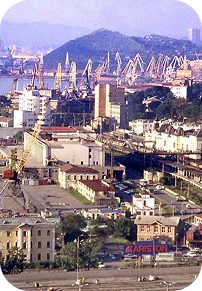
Located on Russia’s Pacific coast, the Commercial Port of Vladivostok (VMTP) and nearby Vostochny Port represent the capital of Russian automobile imports. While traditionally known for handling Japanese and Korean right-hand drive vehicles, Vladivostok has become a vital transshipment destination for left-hand drive vehicles shipped from Dubai via Asian maritime hubs (such as Colombo, Singapore, or Chinese ports).
Strategic Advantages for Car Importers: If your final destination is in Eastern Siberia (Irkutsk, Krasnoyarsk), the Urals (Yekaterinburg, Chelyabinsk, Novosibirsk), or the Far East (Khabarovsk, Yakutsk), importing via Vladivostok eliminates thousands of miles of unnecessary cross-continent trucking from European Russia. Vladivostok features direct, on-dock integration with the Trans-Siberian Railway, allowing vehicles cleared by customs to be loaded directly onto enclosed rail car-carriers (сетки/вагоны-автовозы) for safe railway transport across Russia.
Astrakhan & Port Olya (Caspian Sea / INSTC Corridor)
The International North–South Transport Corridor (INSTC) is the undisputed logistics success story for Dubai-to-Russia automotive trade in 2026. This multimodal corridor bypasses traditional European maritime bottlenecks entirely by linking the UAE directly to southern Russia across the Caspian Sea basin.
How the INSTC Multimodal Route Works:
- Gulf Maritime Leg: Vehicles are loaded into containers or RoRo ferries at Jebel Ali (Dubai) or Port Khalid (Sharjah) and shipped across the Persian Gulf to Iranian southern ports (Bandar Abbas or Bandar Lengeh) in just 2–3 days.
- Overland Transit Across Iran: Containers are transferred to secure railway flatcars or bonded car-carrier trailers and transported north across Iran to Caspian sea ports (Bandar Anzali or Amirabad).
- Caspian Sea Crossing: RORO vessels or container ships carry the vehicles directly across the Caspian Sea to Russian ports at Astrakhan, Port Olya, or Makhachkala.
- Alternative Overland Direct: Alternatively, car carrier trucks transit from Iran through Azerbaijan (via the Astara / Derbent border checkpoint) directly into Dagestan and southern Russia without a Caspian sea vessel crossing.
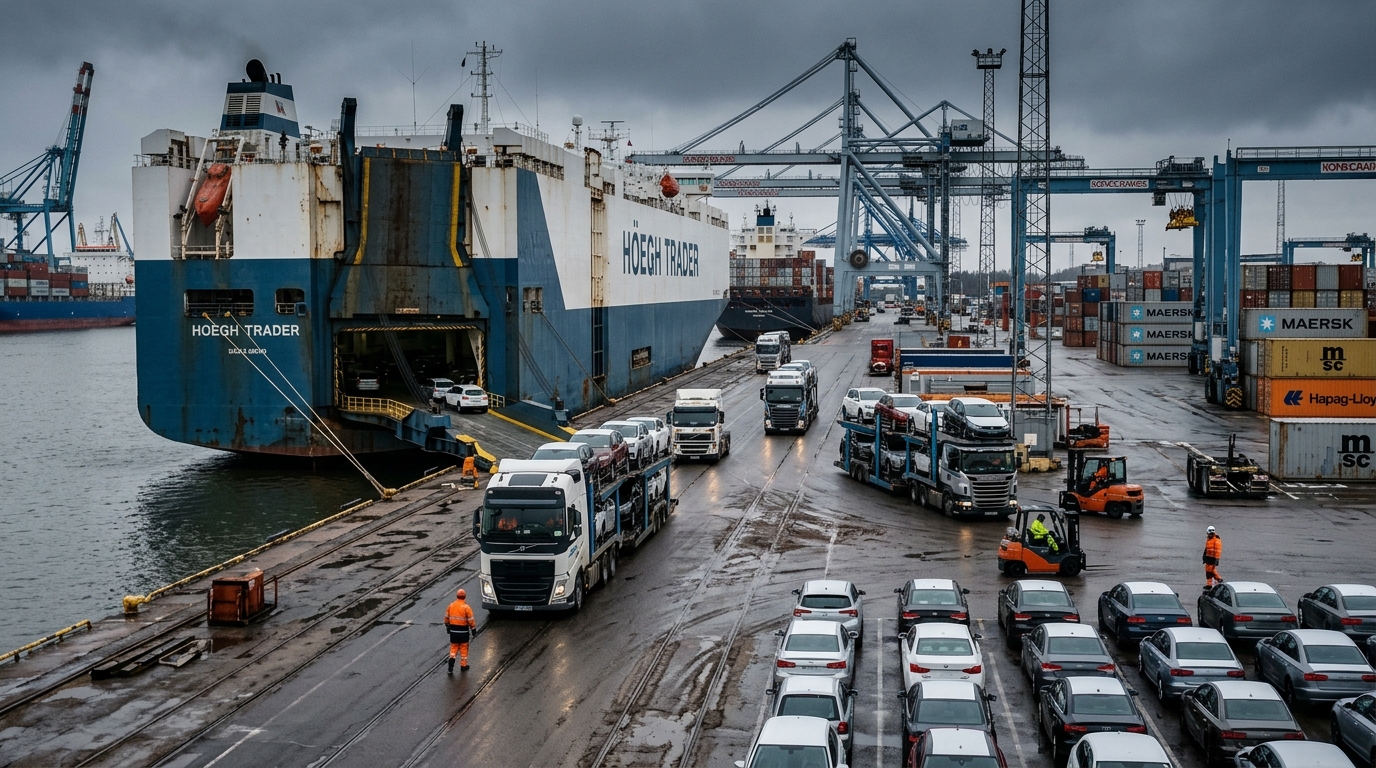
Why Shippers Love INSTC: By eliminating ocean transit around Europe or Asia, total door-to-door transit time from a Dubai showroom to a Moscow driveway drops to as little as 14 days. D2R Cargo operates dedicated weekly INSTC departures with guaranteed customs clearance support at Astrakhan and Moscow terminals.
Car Shipping from Dubai to Moscow & Inland Russian Cities
Because Russia's largest automotive markets—including Moscow, Kazan, Yekaterinburg, Samara, Novosibirsk, and Krasnodar—are inland cities, international maritime shipping must be paired with rapid overland logistics. D2R Cargo provides integrated door-to-door vehicle transport from Dubai directly to any Russian city:
3. Step-by-Step Car Shipping Process from UAE to Russia
Importing a vehicle from the UAE into Russia is a streamlined procedure when handled by experienced freight forwarders and customs brokers. Here is the exact 5-step lifecycle of a D2R Cargo vehicle shipment:
Vehicle Purchase & RTA Deregistration
Once you purchase a vehicle from a Dubai dealership, auto auction, or private seller, the car must be officially deregistered for export with the Dubai Roads and Transport Authority (RTA). The RTA will issue an official Vehicle Export Certificate (often called the "Blue Tag" or Export Title) specifying Russia as the destination country. This document is mandatory for UAE customs export clearance.
Pre-Shipment Inspection, Photos & Port Stuffing
The vehicle is transported by a flatbed recovery truck from the seller's location to our secure Jebel Ali packing warehouse. Our engineers conduct a comprehensive 360-degree photographic condition report, check battery and fuel safety levels (fuel must be drained to 1/4 tank for maritime safety), and load the vehicle into its shipping container using specialized ramps, lashing straps, and custom wheel chocks.
Marine Transit & Real-Time Tracking
Export customs clearance is filed with Dubai Customs, and the container is loaded onto the ocean vessel or RoRo ferry. Shippers receive a formal Bill of Lading (B/L) along with a live container tracking link to monitor the vessel’s progress across the Persian Gulf, Indian Ocean, or Caspian Sea in real time.
Port Arrival, Terminal Unloading & Customs Inspection
Upon arrival at the Russian destination port (e.g., Novorossiysk, St. Petersburg, Astrakhan, or Vladivostok), terminal operators discharge the container to a bonded customs warehouse (СВХ — Склад Временного Хранения). Our licensed Russian customs brokers initiate formal declaration filing, present original export documentation, and assist Russian Federal Customs Service (ФТС РФ) inspectors during mandatory physical verification.
Duty Payment, E-PTS Issuance & Door Delivery
After import duties, excise taxes, VAT, and utilization fees are transferred to the federal treasury, customs issues formal release. Our technical specialists register the vehicle in the Russian federal database to generate the E-PTS (Электронный паспорт транспортного средства). Finally, the car is loaded onto an enclosed multi-car carrier and delivered directly to your doorstep or dealership showroom in Moscow, St. Petersburg, or anywhere in Russia.
4. Russian Customs Duties, Utilization Fee & E-PTS Title (2026 Guide)
Understanding Russian customs taxation is the single most critical financial component of importing an automobile from Dubai. Under Russian Federal Customs Service (ФТС РФ) regulations, the total import tax burden consists of four distinct elements:
1. Import Customs Duty (Таможенная пошлина)
Calculated based on three primary variables: Vehicle Age (0–3 years, 3–5 years, or over 5 years), Engine Displacement in cubic centimeters (см³), and vehicle engine type (petrol, diesel, hybrid, or pure electric). For vehicles under 3 years old imported by natural persons, duty is typically calculated as a percentage of vehicle customs valuation or a fixed Euro rate per cc (whichever is higher).
2. Utilization / Recycling Fee (Утилизационный сбор)
A mandatory federal fee paid for vehicle recycling. In 2026, Russian regulations distinguish strictly between vehicles imported for personal use (which benefit from preferential, lower flat rates if retained for 12 months without resale) and vehicles imported for commercial resale or by legal entities (which are subject to commercial coefficient multipliers based on engine volume).
3. Excise Tax (Акциз)
Applicable primarily to vehicles imported by commercial legal entities or high-horsepower passenger cars. The excise tax rate scales progressively based on engine horsepower (л.с. / kW). Vehicles with horsepower ratings exceeding 200–300 HP face higher per-horsepower excise tiers.
4. Value Added Tax (НДС — 20%)
Applied when vehicles are imported by commercial legal entities (LLC / ООО) or commercial importers. When imported by natural persons for personal use under individual customs procedures (ТПО — Таможенный приходный ордер), VAT is generally integrated into the unified personal import tariff rather than charged as a separate 20% line item.
The E-PTS Title (ЭПТС) & SBKTS Certificate
Russia has completely abolished paper vehicle titles in favor of the Electronic Passport of a Vehicle (ЭПТС — Электронный паспорт транспортного средства) managed via the centralized ELPTS portal (elpts.ru).
Before an E-PTS can be activated for road registration with state traffic police (ГИБДД / ГАИ), imported automobiles must undergo technical safety certification at an accredited testing laboratory to receive an SBKTS Certificate (СБКТС — Свидетельство о безопасности конструкции транспортного средства). D2R Cargo manages the entire lab inspection, GLONASS safety module verification (where applicable), and E-PTS activation on your behalf as a turnkey service.
5. 2026 Shipping Cost Breakdown & Transit Time Table
How much does it cost to ship a car from Dubai to Russia? Below is a comprehensive benchmark pricing table for 2026 reflecting average ocean freight, terminal handling, and inland transit from Jebel Ali to major Russian destinations.
| Destination Port / Gateway | Shipping Modality | Est. Transit Time | Sedan / Crossover | Large SUV / 4x4 |
|---|---|---|---|---|
| Astrakhan / Olya (INSTC) | Multimodal Fast | 12 – 18 Days | $2,400 – $2,800 | $2,800 – $3,400 |
| Novorossiysk (Black Sea) | 20ft Dedicated Container | 18 – 25 Days | $2,600 – $3,100 | $3,100 – $3,600 |
| Novorossiysk (Black Sea) | RoRo Vehicle Carrier | 20 – 26 Days | $2,100 – $2,500 | $2,500 – $2,900 |
| St. Petersburg (Baltic Sea) | 20ft Dedicated Container | 30 – 40 Days | $2,800 – $3,300 | $3,300 – $3,900 |
| St. Petersburg (Baltic Sea) | 40ft HQ Container (2 Cars) | 30 – 40 Days | $3,800 ($1,900/car) | $4,500 ($2,250/car) |
| Vladivostok (Pacific) | 20ft Dedicated Container | 28 – 35 Days | $2,700 – $3,200 | $3,200 – $3,800 |
| Moscow (Door Delivery) | INSTC / Novorossiysk + Truck | 15 – 22 Days | $3,100 – $3,600 | $3,600 – $4,200 |
* Note: Prices listed above represent estimated freight and logistics handling charges from Dubai to Russian port terminals or city hubs. Import customs duties, Russian VAT, recycling/utilization fees, and SBKTS lab fees are calculated separately based on your specific vehicle VIN, valuation, and engine displacement.
6. Required Documents Checklist for Car Exports
To prevent customs holds at either Dubai departure or Russian arrival terminals, prepare the following documentation package prior to vehicle drop-off:
7. Frequently Asked Questions (FAQ)
How much does it cost to ship a car from Dubai to Russia in 2026? +
Shipping a car from Dubai to Russia typically costs between $2,200 and $4,500 depending on the chosen shipping modality (RoRo vs. dedicated 20ft/40ft container), vehicle dimensions, and destination marine port. Multimodal transport via the INSTC corridor to Astrakhan or Moscow generally ranges from $2,500 to $3,800, while dedicated container shipping to Novorossiysk or St. Petersburg starts around $2,800.
Which Russian sea port is best for importing cars from the UAE? +
The ideal port depends entirely on your final destination in Russia. Port of Novorossiysk is ideal for Southern Russia (Krasnodar, Rostov) and fast trucking to Moscow. The INSTC route via Astrakhan / Port Olya offers the fastest transit time (12–18 days) for Central Russia. Port of St. Petersburg serves Northwestern Russia and large commercial dealership shipments, while Port of Vladivostok is the primary gateway for Eastern Siberia and Pacific destinations.
What is the difference between RoRo and Container car shipping from Dubai? +
RoRo (Roll-on/Roll-off) involves driving the vehicle directly onto a specialized vehicle carrier vessel; it is generally more economical but leaves the vehicle exposed to dock handling and does not permit personal items inside the cabin. Container shipping places your vehicle inside a private, fully sealed steel container (20ft for a single car or 40ft High Cube for two vehicles), providing maximum weather protection, enhanced security, and the ability to pack spare parts or personal belongings inside the vehicle.
Can I put personal belongings inside my car when shipping to Russia? +
If you ship via dedicated container freight (20ft or 40ft), yes—you are permitted to pack personal effects, spare tires, or luggage inside the vehicle trunk and cabin, provided all items are declared on the packing list. If you ship via RoRo vessel, strict maritime safety rules prohibit any personal belongings inside the car; the vehicle must be completely empty except for factory accessories and spare wheel.
How long does customs clearance take at Russian ports? +
When all export documents (RTA certificate, commercial invoice, bill of lading) and importer tax numbers (INN/SNILS) are correctly prepared in advance, physical customs inspection and formal duty assessment at major Russian marine ports typically take between 2 to 4 business days. SBKTS laboratory testing and E-PTS title registration generally require an additional 3 to 5 business days following terminal release.
Ready to Ship Your Car from Dubai to Russia?
Avoid customs delays, port storage fines, and shipping risks. Get an instant, all-inclusive quote for RoRo, dedicated container, or rapid INSTC multimodal transport with door-to-door delivery across Russia.